Research
I use mathematical modeling and machine learning to understand how individual behaviour, intervention strategies, and structural conditions combine to shape population health.
Research statement
My work sits at the intersection of mathematical epidemiology, applied analysis, and data science. I develop mechanistic models that capture key biological and behavioural processes, and I integrate these models with modern statistical and machine learning approaches to guide decision-making in public and population health.
A recurring theme in my research is the importance of trustworthy and interpretable models in settings where data are limited, noisy, or structurally biased. I am interested in how qualitative model structure, parameter uncertainty, and social context interact to produce complex dynamics, and in how we can design interventions that are effective, equitable, and robust to modelling assumptions.
Methodologically, I work with compartmental and hybrid mechanistic–data-driven models, optimal control, sensitivity and uncertainty analysis (including LHS–PRCC pipelines), and numerical simulation. Substantively, my projects span infectious diseases, noncommunicable conditions such as obesity, and social phenomena such as crime, gang activity, and substance use, viewed through the lens of public health.
Current research themes
- Hybrid mechanistic–machine learning models for health systems. Linking compartmental or agent-based models with ML components to improve prediction and scenario analysis, while retaining interpretability and mechanistic insight.
- Interventions, behaviour, and compliance. Studying how testing, isolation, treatment adherence, and fear-based deterrence influence disease transmission, crime dynamics, and other outcomes, using optimal control and cost-effectiveness analysis.
- Uncertainty and sensitivity in complex models. Quantifying uncertainty in parameters and initial conditions, and identifying key leverage points for policy through global sensitivity analysis.
- Equity and heterogeneity. Exploring how heterogeneity in risk, access, and behaviour shapes the impact of public health interventions and predictive models.
Tools & computational practice
Selected research highlights
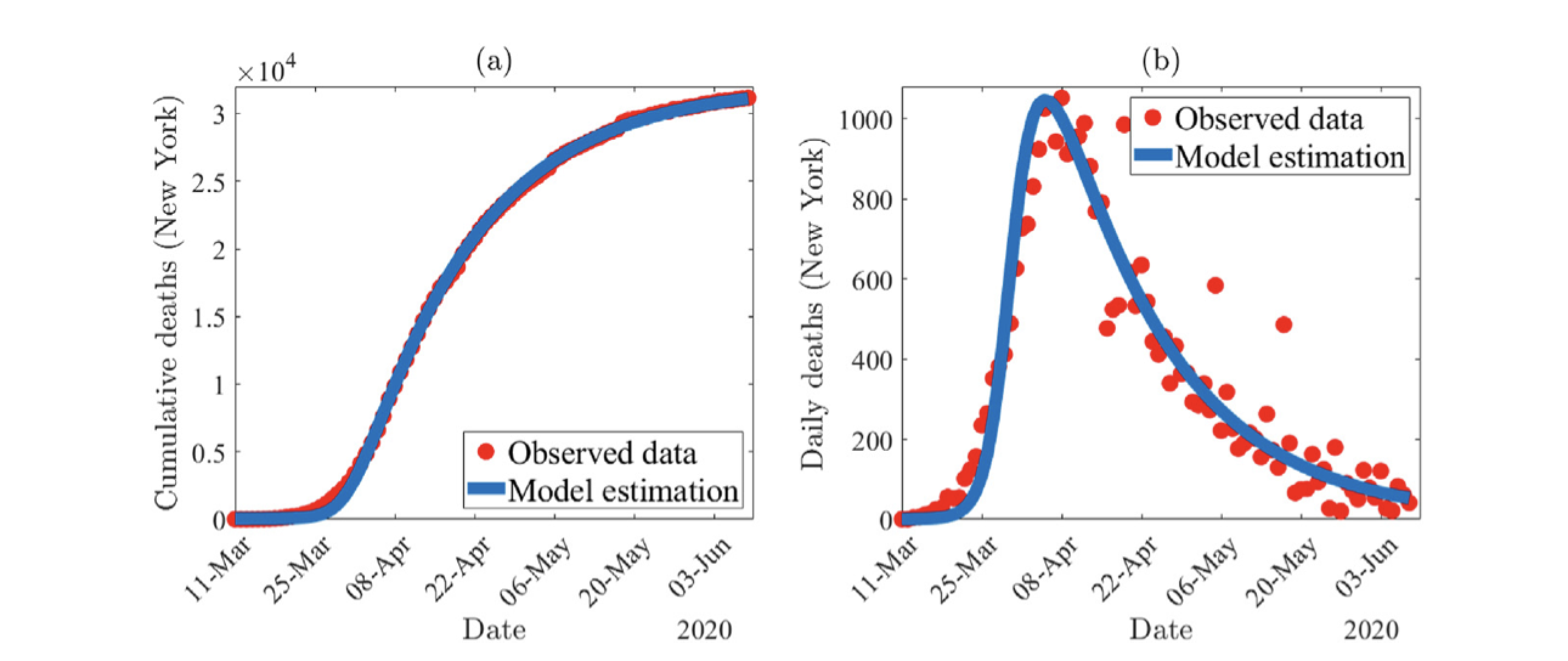
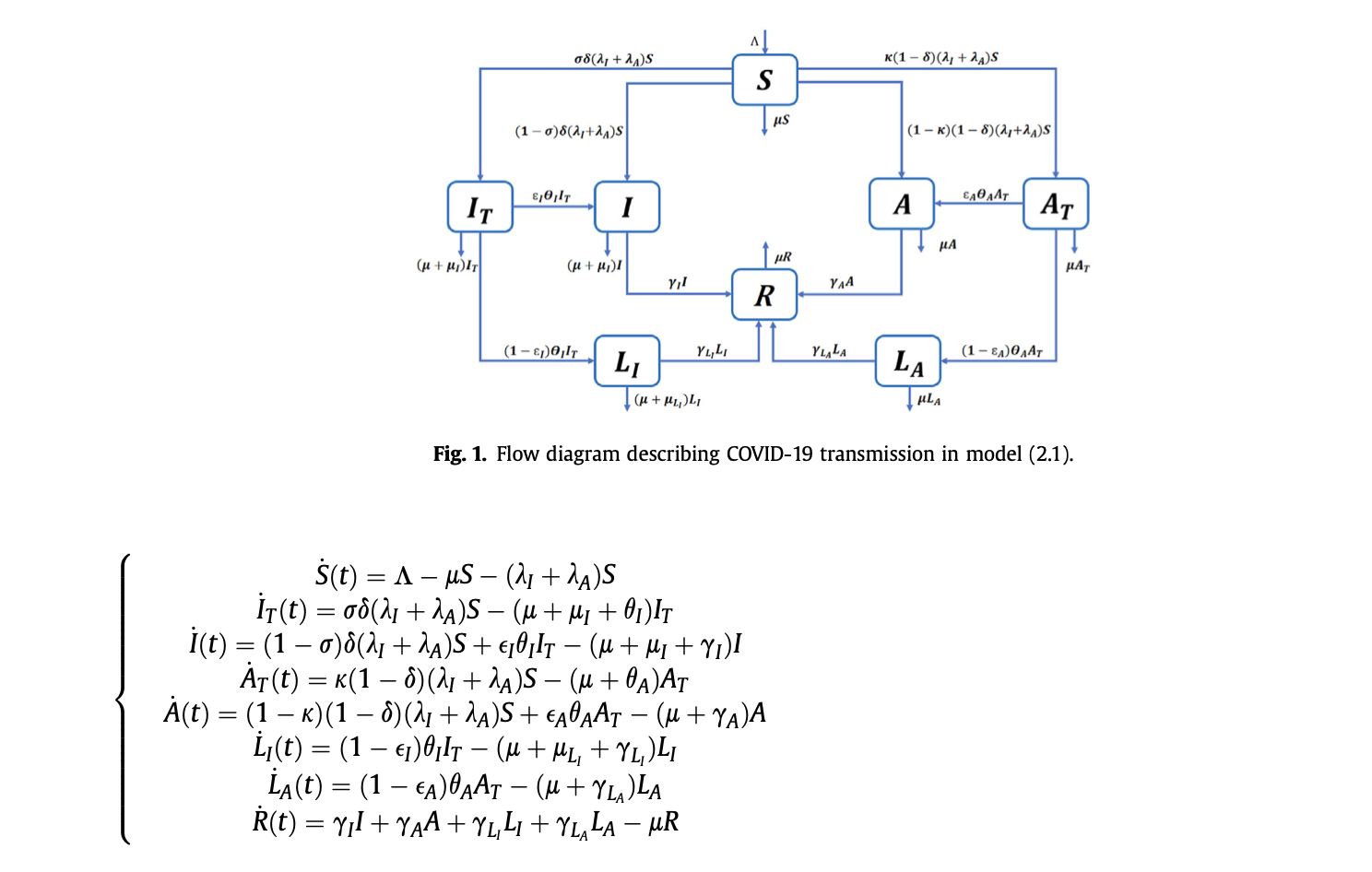
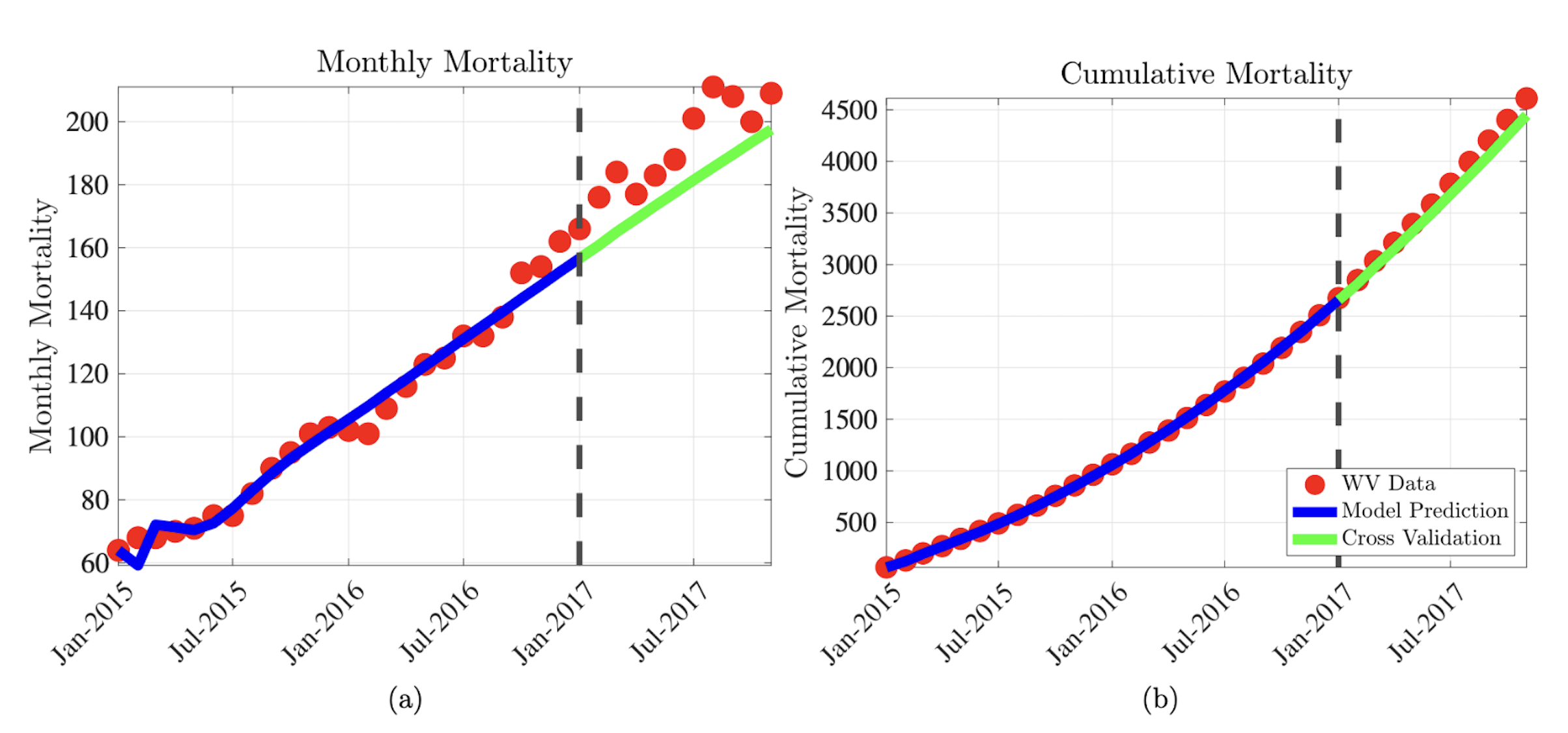
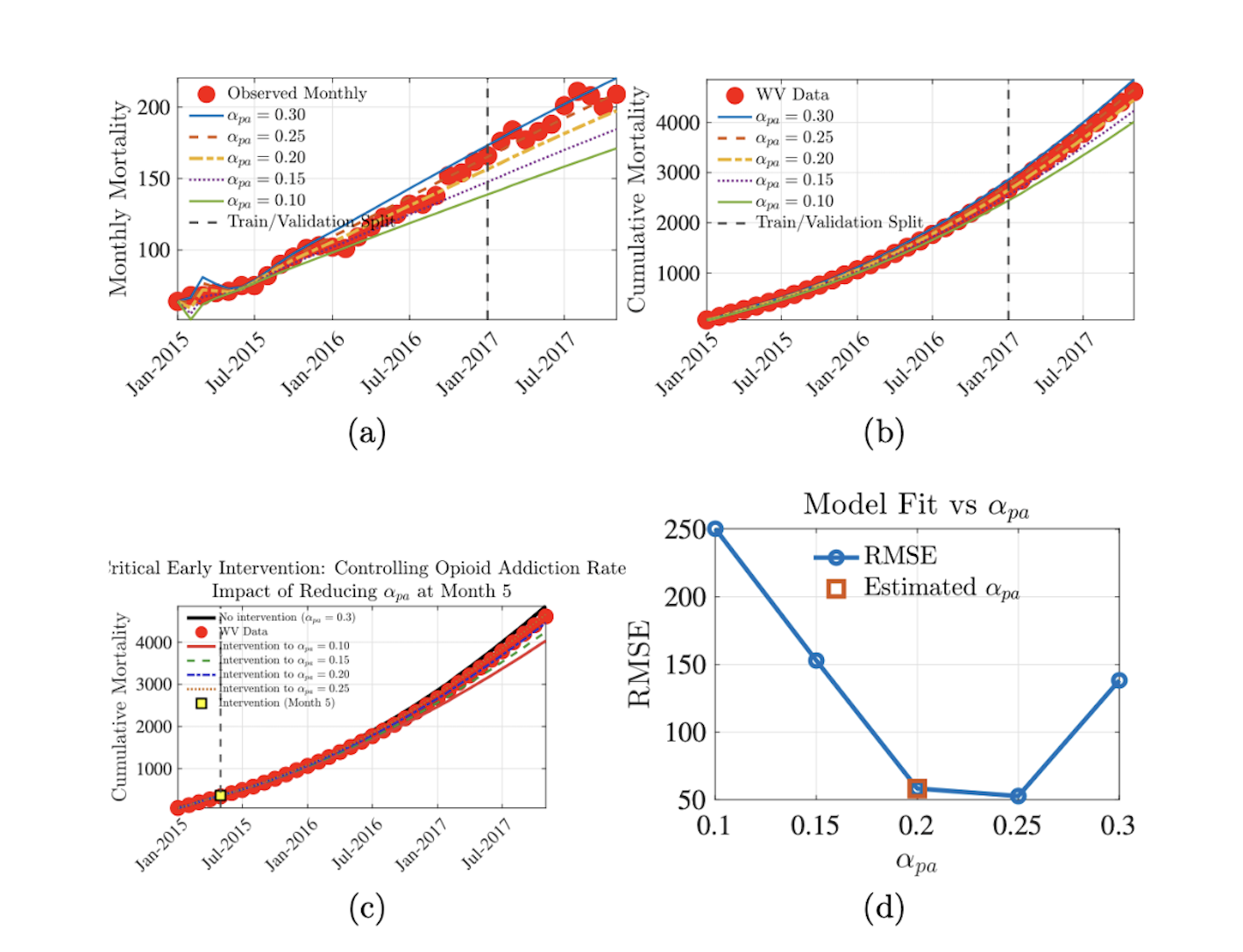
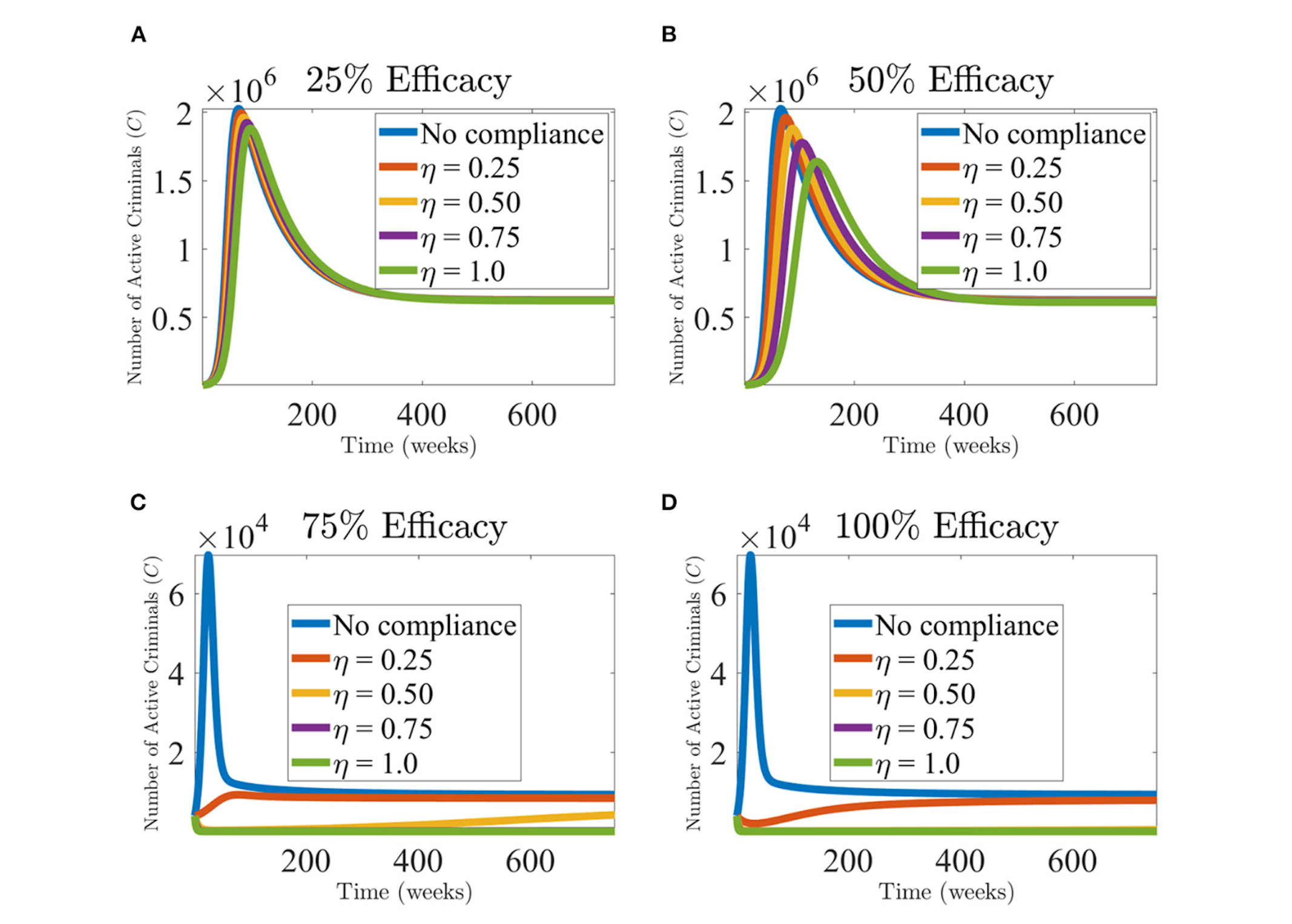
A few recent modeling results and visualizations from ongoing projects on COVID-19, the opioid crisis, and crime dynamics. Please contact me if you would like preprints, code, or additional details.